


The Skills You Don't See: What Really Keeps a Traffic Management Site Safe


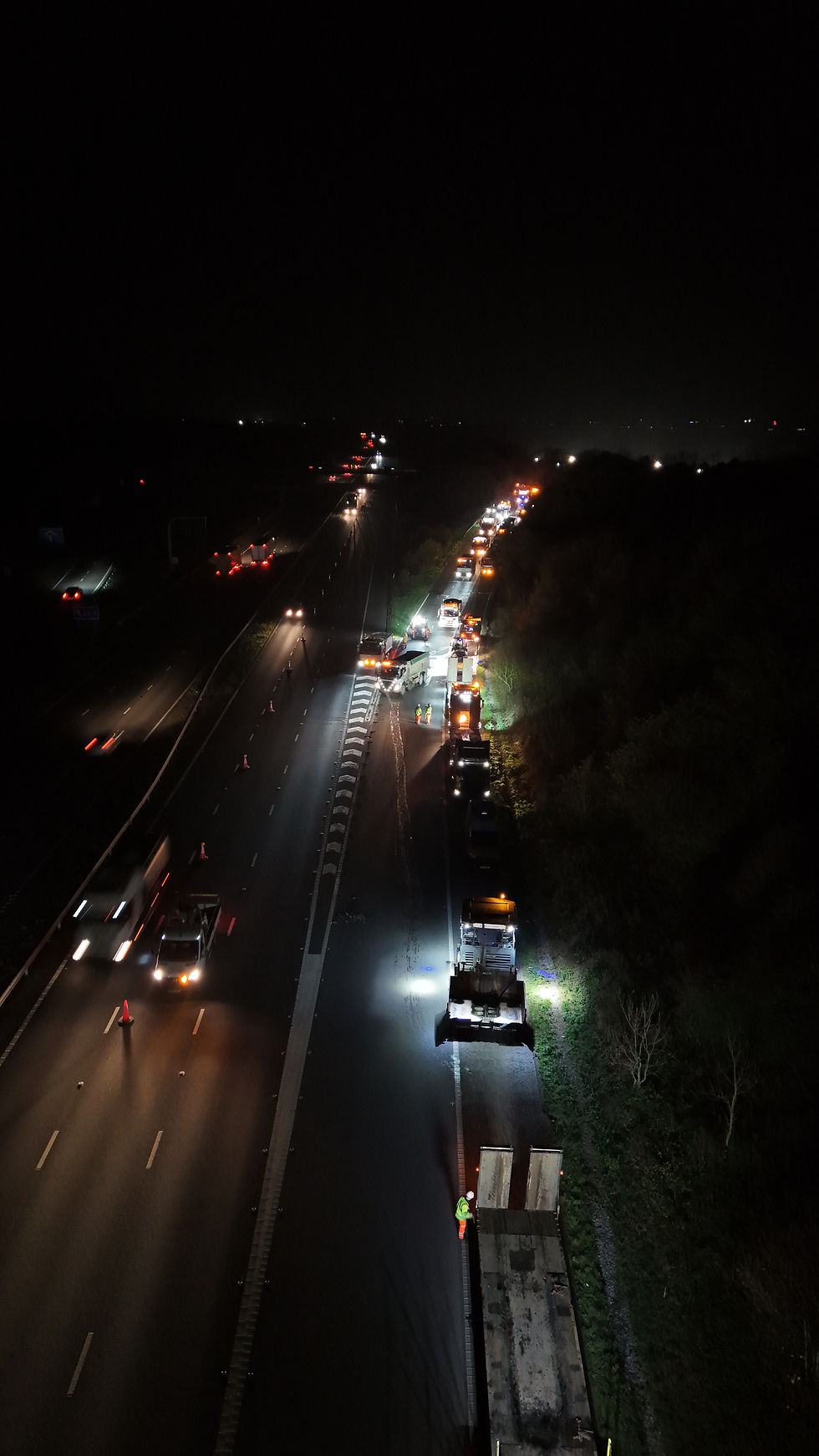
Drive past any set of roadworks and you'll see the obvious parts of traffic management: signs, cones, barriers, temporary signals, and the impact protection vehicle sitting behind a closed lane. All of it is specified and laid out in line with Chapter 8 of the Traffic Signs Manual and the Safety at Street Works and Road Works Code of Practice.
What you won't see is the thinking that goes on around that equipment, from the moment a crew pulls up to the moment the last cone is lifted. That thinking is what turns a correctly drawn Traffic Management Plan into a site that actually stays safe through a full shift of live traffic, changing weather and unpredictable people.
A plan is only as good as the people putting it out
A Traffic Management Plan (TMP) tells a crew what should go where. It can't tell them that a delivery lorry has parked across the planned taper position, extenuating weather conditions or if members of the public won’t adhere to signage.
Those things are picked up by operatives on the ground. How they respond comes down to experience and judgement, not kit. In more than 25 years of delivering temporary traffic management, that is the part of the job we have found makes the biggest difference to how a site performs.
Reading the road before the first cone goes down
Installation and removal are the highest-risk stages of most jobs. Operatives are on foot next to live traffic before any protection is in place, so the minutes spent assessing the location beforehand matter.
The order of work and each person's position are agreed before anyone steps out. Once the layout is in, that awareness doesn't switch off. Someone is always watching the traffic.
Knowing when the plan needs to change, and when work needs to stop
Site conditions rarely stay the same for a full shift. Heavy rain cuts visibility and lengthens stopping distances. The works themselves spread beyond the agreed working space.
A skilled operative spots these changes early and responds within the limits of the TMP, whether that means extending advance signing, adjusting signal timings or switching to manual control. Just as importantly, they recognise when a change goes beyond what the plan allows and needs to be escalated to the supervisor or the client, or when work needs to stop altogether. Dynamic risk assessment is a skill applied continuously throughout the day, not a form completed once in the morning.
Clear communication in every direction
Traffic management operatives communicate with more people in a day than most roles on a site. That includes their own crew over radio across plant noise, the client's site team about what the layout can and can't accommodate, and plant operators reversing in and out of the working space.
It also includes the public. Pedestrians, wheelchair users, people with pushchairs and people with visual impairments all need a safe, accessible route past the works. When an ambulance or fire appliance approaches a stop/go or signal-controlled section, both ends of the site have to act together, quickly and without confusion, to clear a path. None of that happens by accident.
Staying calm when others aren't
Delays frustrate drivers, and road workers are too often on the receiving end. Verbal abuse, vehicles ignoring stop boards and drivers deliberately entering closures are a regular part of the working environment across the UK.
Operatives need the composure not to escalate a confrontation, to keep themselves and their colleagues safe, and to record and report incidents accurately so they can be acted on. It's one of the least visible skills in the industry and one of the most demanding.
The same skills on every job, whatever the size
Our crews work across major civil engineering schemes, utilities programmes, motorway and high-speed road works and events. They also deliver traffic management for routine maintenance such as gully emptying, tree surgery, verge cutting and trial holes.
The skills described here apply equally to both. A one-hour job on a rural lane still has live traffic, pedestrians and the potential for something unexpected. In some respects shorter jobs carry more risk, because there is a temptation to treat them as routine. We don't.
Why this matters if you're looking for traffic management
Accreditations such as National Highways Sector Scheme (NHSS) confirm that a provider meets the required standards of competence, and they matter. What they can't show you is how a crew will think on its feet when the site doesn't match the drawing. For a client, that is the difference between a job that runs to programme and one that generates stoppages, complaints and delays.
If you're comparing traffic management providers, it's worth asking:
How do their crews deal with site conditions?
Who has the authority to stop work if the layout is no longer safe?
How will their supervisor communicate with your site team during the shift?
How do they handle and report abuse or incursions on site?
The answers will tell you more about a provider than its equipment list.
The people behind the equipment
Signs and cones are the visible face of traffic management, and getting them right is essential. But equipment doesn't watch the traffic, read a changing situation or make a decision under pressure. People do.
If you have a project coming up, whether it's a major scheme or a single day of maintenance, get in touch with Beaumont Traffic Management to discuss your traffic management requirements.


Comments