


Roadworks in the Dark: How Traffic Management Changes When the Clocks Go Back


The clocks went back yesterday. For most people, that means darker commutes. For anyone working on the highway, it changes the risk profile of every site.
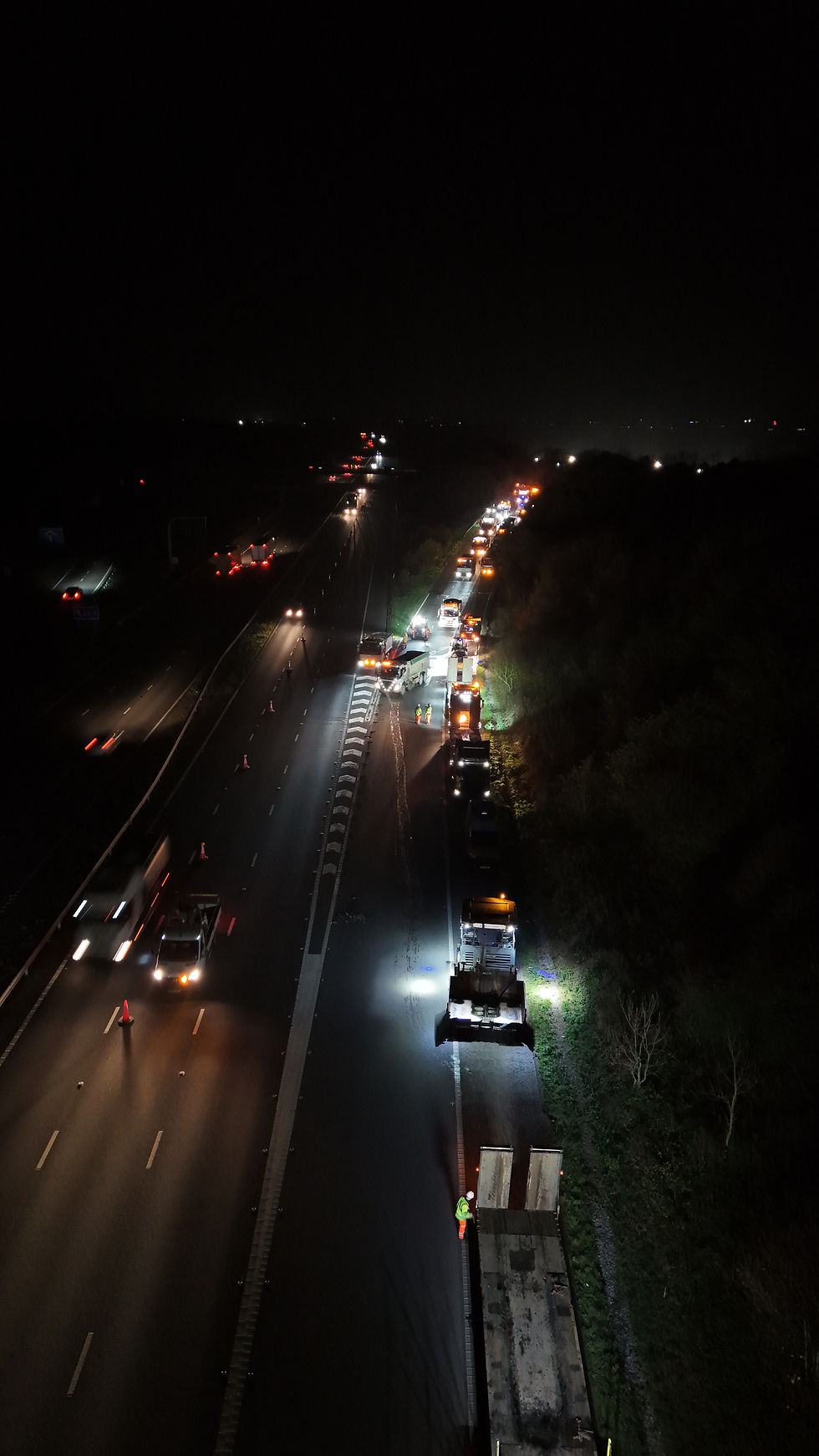
From now until spring, a much larger share of roadworks will take place in low light or darkness. Good temporary traffic management (TTM) accounts for that from the design stage, not as an afterthought.
Lighting the works
In daylight, a well-placed sign or cone does its job on its own. After dark, drivers rely on lighting and retroreflective materials to read the layout. Signs, cones and barriers need appropriate lighting during the hours of darkness, in line with Chapter 8 of the Traffic Signs Manual and Safety at Street Works and Road Works code of practice.
That means checking lamps are working and positioned correctly, and that reflective surfaces are clean. A dirty sign can lose much of its visibility at night.
Keeping people visible
Operatives on site depend on high-visibility clothing to be seen by approaching drivers. Over winter, the correct class of clothing matters more than ever, and so does its condition. Faded, torn or dirty hi-vis is far less effective in headlights.
Low winter sun
Darkness isn't the only visibility problem. Winter sun sits low in the sky in the morning and late afternoon, and can dazzle drivers as they approach works. Advance signing and the position of the works need to account for which direction drivers will be facing at the busiest times.
Weather and road conditions
Wet roads, ice, frost and fallen leaves all increase stopping distances. Approach layouts and advance warning distances need to give drivers enough time to react, especially on higher-speed roads.
Sites also need checking more often in bad weather. Wind can move signs and cones, and a layout that was correct at the start of a shift may not be by the end of it.
Driver fatigue
Dark evening commutes come at the end of a working day, when drivers are more likely to be tired and less alert. Clear, consistent and uncluttered signing helps drivers understand what's being asked of them quickly.
Planning ahead for winter works
If you're planning works between now and March, it's worth considering:
Whether working hours should change to make the most of daylight
What lighting the layout will need, and who will check it
How the site will be monitored in poor weather
Whether diversion routes are suitable in the dark
Shorter days, same standards
At Beaumont Traffic Management, our directly employed team design and install every scheme with the conditions in mind, including the ones that arrive with the clocks going back.
Planning winter works? Get in touch with our team to make sure your traffic management is right for the season.


Comments